What Is Digital Marketing?
April 2026 By Patience Mumbi
In today’s digital world, having a great product or service is not enough—you also need visibility. Businesses are no longer relying only on traditional methods like word of mouth, flyers, or physical stores. Instead, they are using digital platforms to reach, engage, and convert customers. This is where digital marketing comes in. In this article, we introduce the concept of digital marketing, explaining what it is, how it works, and why it is essential for businesses of all sizes.
What Is Digital Marketing?
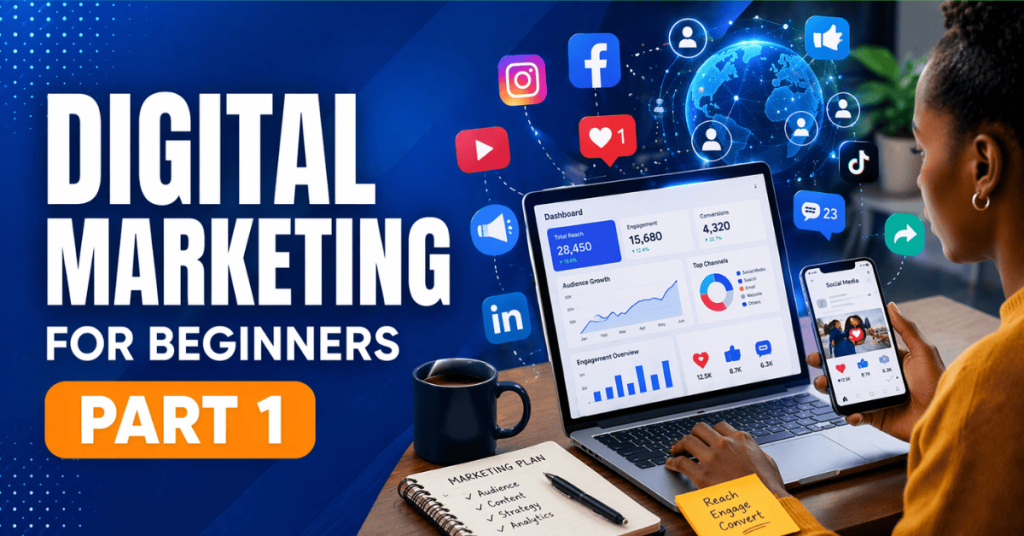
Digital marketing refers to the use of online platforms, digital channels, and technology to promote products or services. It enables businesses to reach, engage, and interact with their target audience in real time.
It involves reaching your target audience through:
Social media: Platforms like Facebook, Instagram, and LinkedIn allow businesses to share content, engage with customers, and build brand awareness.
Search engines: Tools like Google help businesses appear in search results when users look for related products or services, increasing visibility and traffic.
Websites: A business website serves as a central hub where customers can learn more about your offerings, access information, and make purchases or inquiries.
Email: Email marketing allows businesses to communicate directly with customers, share updates, promote offers, and build long-term relationships.
Online advertising: Paid ads on platforms like Google Ads or social media help businesses reach specific audiences quickly and effectively.
In simple terms, digital marketing is about connecting your business with people online, where most customers spend their time, making it a powerful tool for growth and visibility.
Why Digital Marketing Matters
1. Expands Your Reach
Digital marketing allows you to reach a wider audience beyond your physical location.
Whether you are in Lusaka or elsewhere, your business can connect with customers across the country—or even globally.
2. Cost-Effective
Compared to traditional marketing, digital marketing is more affordable and flexible.
You can start small and scale as your business grows.
3. Targeted Marketing
Digital platforms allow you to target specific audiences based on:
- Age
- Location
- Interests
- Behavior
This makes your marketing more effective.
4. Measurable Results
One of the biggest advantages is the ability to track performance. You can measure:
- Views
- Clicks
- Engagement
- Conversions
This helps you understand what works and improve your strategy.
5. Improves Customer Engagement
Digital marketing allows direct interaction with your audience through:
- Comments
- Messages
- Feedback
This builds relationships and trust.
Key Types of Digital Marketing
1. Social Media Marketing
Using platforms like Facebook, Instagram, and LinkedIn to promote your business and engage with your audience.
2. Search Engine Optimization (SEO)
Improving your website so it appears in search engine results when people search for related topics.
3. Content Marketing
Creating valuable content such as blog posts, videos, and graphics to attract and engage your audience.
4. Email Marketing
Sending targeted messages to your audience to inform, engage, or promote your services.
5. Paid Advertising
Running ads on platforms like Google or social media to reach a larger audience quickly.
How Digital Marketing Works
Digital marketing follows a simple process:
- Attract: Bring people to your platform
- Engage: Capture their interest with content
- Convert: Turn them into customers
- Retain: Keep them coming back
Each step is important for building a successful digital presence.
Who Needs Digital Marketing?
Digital marketing is essential for:
- Small businesses
- Startups
- NGOs and organizations
- Personal brands
- Established companies
Regardless of size or industry, every business can benefit from a strong digital presence
Common Misconceptions About Digital Marketing
“Digital Marketing Is Only for Big Businesses”
This is not true. Small and medium-sized businesses can also benefit greatly from digital marketing. With the right strategy, even a small business can reach a wide audience, build a strong brand, and compete effectively in the market.
“You Need a Lot of Money to Start”
Digital marketing does not always require a large budget. Many strategies, such as organic social media, content creation, and basic SEO, can be implemented with little or no cost, especially when starting out.
“It’s Too Technical”
While some aspects can be technical, many digital marketing tools and platforms are designed to be user-friendly. With basic training and practice, anyone can learn how to use them effectively.
Understanding these misconceptions helps businesses approach digital marketing with confidence, making it easier to get started and take advantage of available opportunities.
Conclusion
Digital marketing is not just a trend—it is a necessity in today’s business environment. It provides businesses with the tools to reach their target audience, build meaningful relationships, and promote their products or services in a cost-effective and measurable way. By leveraging digital channels, businesses can increase visibility, engage customers more effectively, and adapt quickly to changing market demands.
If you want your business to remain relevant and competitive, embracing digital marketing is no longer optional, it is essential.
What’s Next?
In Part 2 of the Digital Marketing for Beginners Series, we will explore how to choose the right platforms for your business, helping you focus your efforts where they matter most.
Need Help with Digital Marketing?
We provide digital marketing services, including social media management, content creation, and strategy development to help your business grow online.
Get in touch with us today and take your digital presence to the next level.